
Child Protective Services
Our mission: inspiring hope and healing for children and families by ensuring safety, providing support, and achieving permanency.
Intake, Ongoing & Visitation
Intake Services
Intake services are typically the first point of contact at the agency. Intake receives calls of alleged abused and neglected children. Each call is individually recorded in the Statewide Automated Child Welfare Information System and reviewed to determine a screening decision. Intake Services also include after-hour emergency response.
Ongoing Services
The primary goal of the Ongoing Unit is to provide supportive case management to strengthen family supports and to keep families together. In cases where children have been removed from their home, the Ongoing Unit works toward family reunification. A case plan is developed by working closely with the family, support persons, and service providers.
Visitation
Visitation Services offer a nurturing and secure environment for children to connect with their loved ones while in agency custody. Available on weekdays until 5:00 p.m., these supervised visits take place in one of two designated rooms, with a staff member present to ensure a safe and supportive experience for families.
Resource Guide
Our success is deeply connected to the strength of the community we serve. We take pride in the relationships we have built with local providers, recognizing that the health and well-being of children and their caregivers is a shared responsibility. Explore our full Resource Guide to discover available support services.
Annual Report
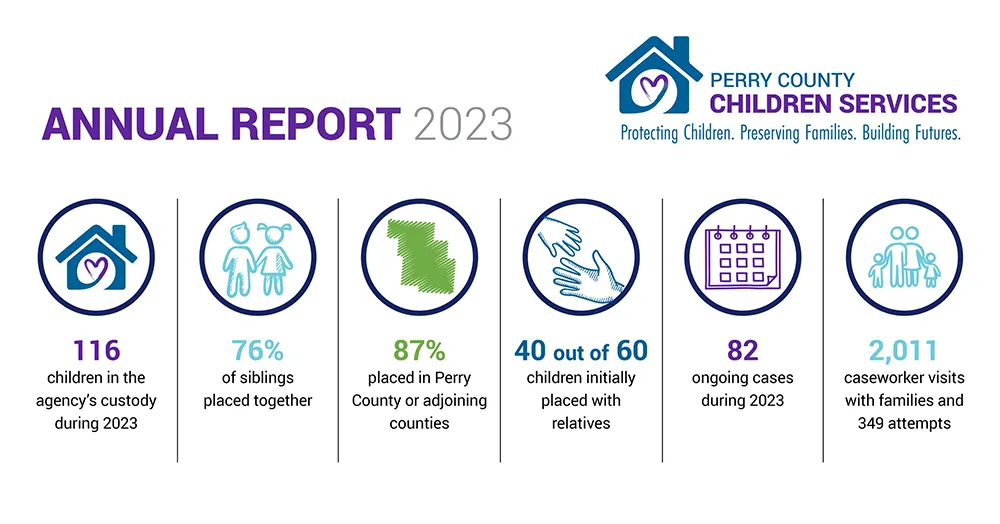
Learn about the important work we are doing across the community, including our new School Outreach Program, take an at-a-glance look at the numbers that tell the story of our impact, and review our financials. We are proud to be able to tell our story and we hope you will take a minute to review it.
Foster Care & Adoption
Foster Care
Foster Care services provide full-time substitute care and supportive services to children in a least restrictive setting. Foster families participate in home assessments and complete background checks. All PCCSB foster homes are licensed through the State of Ohio.
Adoption
Adoption services provide a permanency plan for children in the permanent custody of Child Protective Services. Children are matched with adoptive families that best meet their individual needs.
Kinship
When children are unable to remain safely in their own homes they may be placed with relatives or close family friends. Contact Perry County JFS Protective Services if you believe you may have a kinship relationship with a child in the custody of the agency.
Apply for Kinship Permanency Incentive Funds
Perry County residents can apply by calling or emailing the Kinship Navigator.

Licensing
If you are interested in becoming a licensed foster or adoptive parent, please complete the Ohio Foster and Adoptive Parent Inquiry Form or call Perry County Children Services at (740) 342-3836.
PASSS
Post Adoption Special Services Subsidy (PASSS) funding is designed to help families meet the special needs of adopted children. If you are interested in learning more about PASSS, please visit the OhioKAN website.
If you are a kinship or adoptive family seeking free resources, visit OhioKAN.
Ohio Kinship & Adoption Support Programs
Ohio Works First (OWF) — Child-Only Benefit
Ohio Works First provides cash assistance to eligible families through the Temporary Assistance for Needy Families (TANF) program. The child-only benefit supports children living with caregivers other than their parents. These children do not have OWF work requirements. Payments vary based on household size.
OhioKAN — Kinship & Adoption Navigator
OhioKAN offers personalized support for kinship and adoptive families, helping them access resources and assistance. Launched in 2020, this statewide program strengthens families through engagement and advocacy.
Call 1-844-OhioKAN (1-844-644-6526) or visit OhioKAN.ohio.gov.
Ohio’s Kinship Supports & ProtectOHIO Program
This initiative strengthens kinship placements by connecting caregivers with federal, state, and local resources to meet children’s physical, emotional, and financial needs.
- Kinship Caregiver Support Plan — provides case management, financial assistance referrals, and training.
- Monthly home visits — strengthen caregiver–coordinator relationships and improve support services.
Kinship Financial Assistance Programs
- Kinship Guardianship Assistance Program (KGAP) — financial support for relatives who assume legal guardianship of children previously in their foster care.
- Kinship Support Program (KSP) — financial aid to eligible kinship caregivers while they work toward foster parent certification.
- Kinship Permanency Incentive Program (KPI) — direct payments to kinship families at placement and at six-month intervals. Initial payment $525, additional payments $300.
How to Report Abuse and Neglect
Reports can be made in person at Perry County JFS Protective Services during office hours from 8:00 a.m. to 4:00 p.m., Monday through Friday, excluding holidays. You may also call (740) 342-3836 during normal business hours. After hours and on weekends, contact the Perry County Sheriff’s Office at (740) 342-4123 or dial 911 for emergency situations involving children.
Information that is beneficial when making a report (if known)
- The names of all individuals in the home
- Ages and dates of birth of individuals involved
- Addresses and phone numbers of the family being reported
- Current issues or reasons for calling
- Current physical location of the individuals involved
- Hazards or dangers from persons or in the home, if known
- Any other known pertinent information
What is abuse and neglect?
- Physical abuse
- Bruises, marks, cuts, or other types of injuries resulting from non-accidental means, including excessive or out-of-control discipline.
- Neglect
- Failure to provide a child with basic needs such as food, medical care, clothing, and protection that a child needs for adequate growth and development.
- Emotional abuse
- Consistent and ongoing negative interaction between a caregiver and a child, such as constant and undue criticism, verbal abuse, ignoring the mental needs of a child, and other forms of rejection.
- Sexual abuse
- Sexual activity or stimulation between an adult and a child, ranging from fondling to rape. This may also include child pornography and exposing children to situations of a sexual nature. Sexual abuse may also occur between juveniles depending on the ages and the sexual behavior.
- Dependency
- A child being homeless, destitute, or without adequate parental or caregiver care through no fault of the child’s parents or caregiver.
School Outreach Program
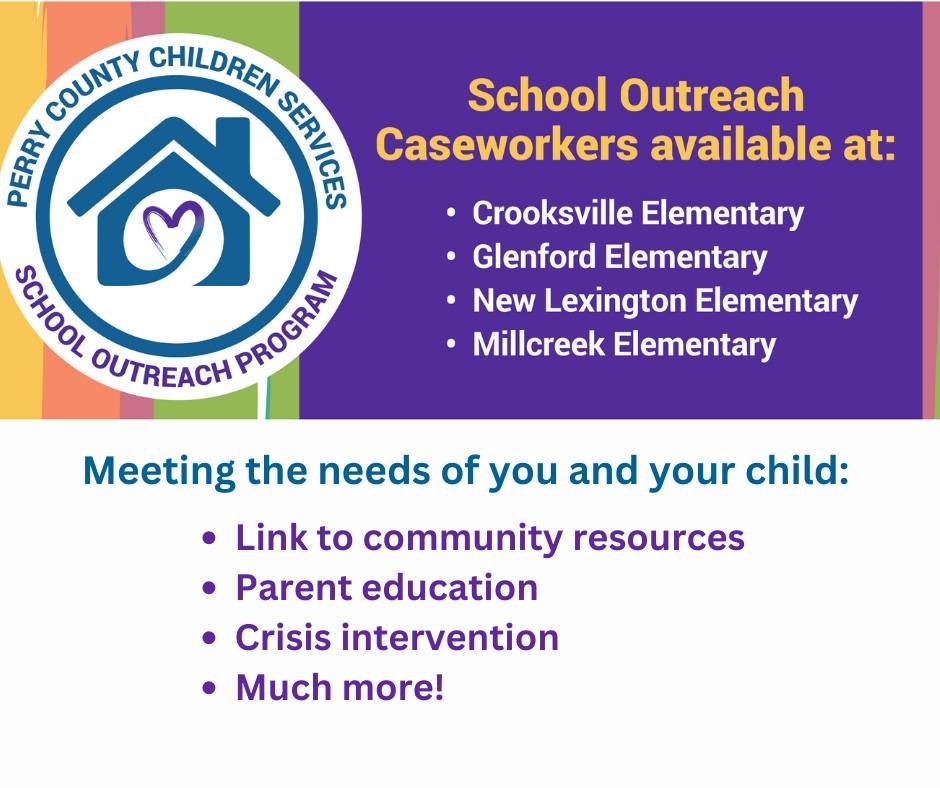
The School Outreach Program is a short-term intervention program designed to help children and families by breaking barriers that hinder a child’s overall potential and academic success. The goal of the program is to provide families and children with support and prevention services that can reduce the need for more formal agency intervention.
Signs that a child should be referred to School Outreach
- Students experiencing poor social and academic success due to behavioral difficulties
- Children with truancy issues
- Children who display anger, aggression, and noncompliance
- Children who display withdrawn behaviors, sadness, poor social skills, and poor family dynamics
Services provided by School Outreach caseworkers
- Assessment
- Parent education
- Truancy prevention
- Community referrals
- Crisis intervention
- Contacts with students and parents
- Link to community resources
- Summer support
- Home visits
School Outreach staff





Contact Us

Child and Adult Protective Services
526 Mill StreetNew Lexington, Ohio 43764
Hours: Monday–Friday, 8:00 a.m.–4:00 p.m.
Phone: (740) 342-3836
Fax: (740) 342-5531
For emergencies during non-business hours, contact the Perry County Sheriff’s Office at (740) 342-4123 or dial 911.
Frequently Asked Questions
My child’s parent will not allow me to see my child. Will you go out and check on them?
Children Services cannot check on a child without specific allegations of abuse and neglect. The State of Ohio provides guidelines that must be met before Children Services can initiate an investigation. This is a legal matter, and it is best to contact an attorney for advice. Perry County Juvenile Court provides free legal counsel for Perry County residents on the first Tuesday of every month from 4:00 to 7:00 p.m. at Perry County Juvenile Court. Law enforcement agencies can conduct a well-child check — you may call your local law enforcement for assistance.
I don’t want to send my child back with my ex. Can I keep him or her?
Children Services cannot interfere with custody or court orders unless there are serious concerns of safety or harm to the child. If a child is born to an unmarried mother, the mother automatically has full custody of the child unless the court orders otherwise. It is best to contact an attorney. Perry County Juvenile Court provides free legal counsel for Perry County residents on the first Tuesday of every month from 4:00 to 7:00 p.m. at Perry County Juvenile Court.
What information do I need to have to report abuse and neglect?
It is best to have as much information as possible when reporting abuse and neglect. However, you are still encouraged to report any and all suspicions. To better help the Investigation Unit, the following information is useful:
- Names, addresses, and telephone numbers of all involved parties
- Approximate age or date of birth of the child and their level of functioning or behavior
- When and where the alleged abuse or neglect occurred
- Type and extent of abuse and current condition of the child
- How the child is currently at risk of abuse or neglect
- Circumstances surrounding the alleged abuse or neglect
Can you help me get custody of my child or grandchild?
This is a legal matter, and it is best to contact an attorney for advice. Perry County Juvenile Court provides free legal counsel for income-eligible Perry County residents on the first Tuesday of every month from 4:00 to 7:00 p.m. at Perry County Juvenile Court.
What age is it legal to be home alone?
There is no legal age to be home alone. As a parent you have the authority to decide whether your child is mature enough to handle the responsibility. The child should not be afraid, should be trusted to follow guidelines, and should know how to handle an emergency and contact help if needed.